



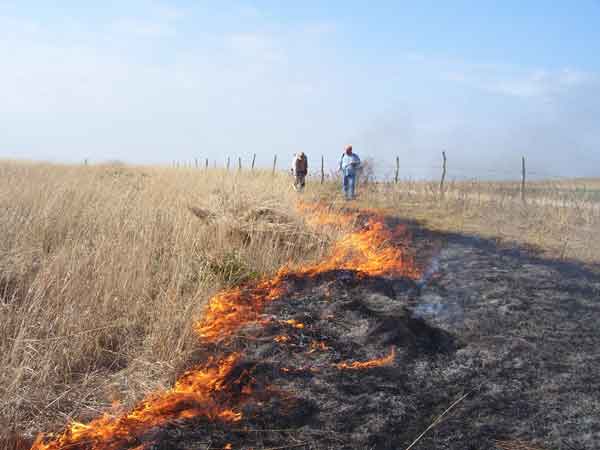
Burning in the Flint Hills is likely to continue today, which may lead to elevated air pollution through central and eastern Kansas.
According to the Kansas Department of Health and Environment, these conditions are expected to exist through Saturday. The air quality index will likely range from moderate to unhealthy for sensitive groups, and even Unhealthy near burn activity.
Burning within the Flint Hills occurs annually to help preserve the tallgrass prairie, control invasive species such as Eastern Red Cedar and Sumac and provide better forage for cattle. Prescribed burning minimizes the risk of wildfires and is effective in managing rangeland resources.


